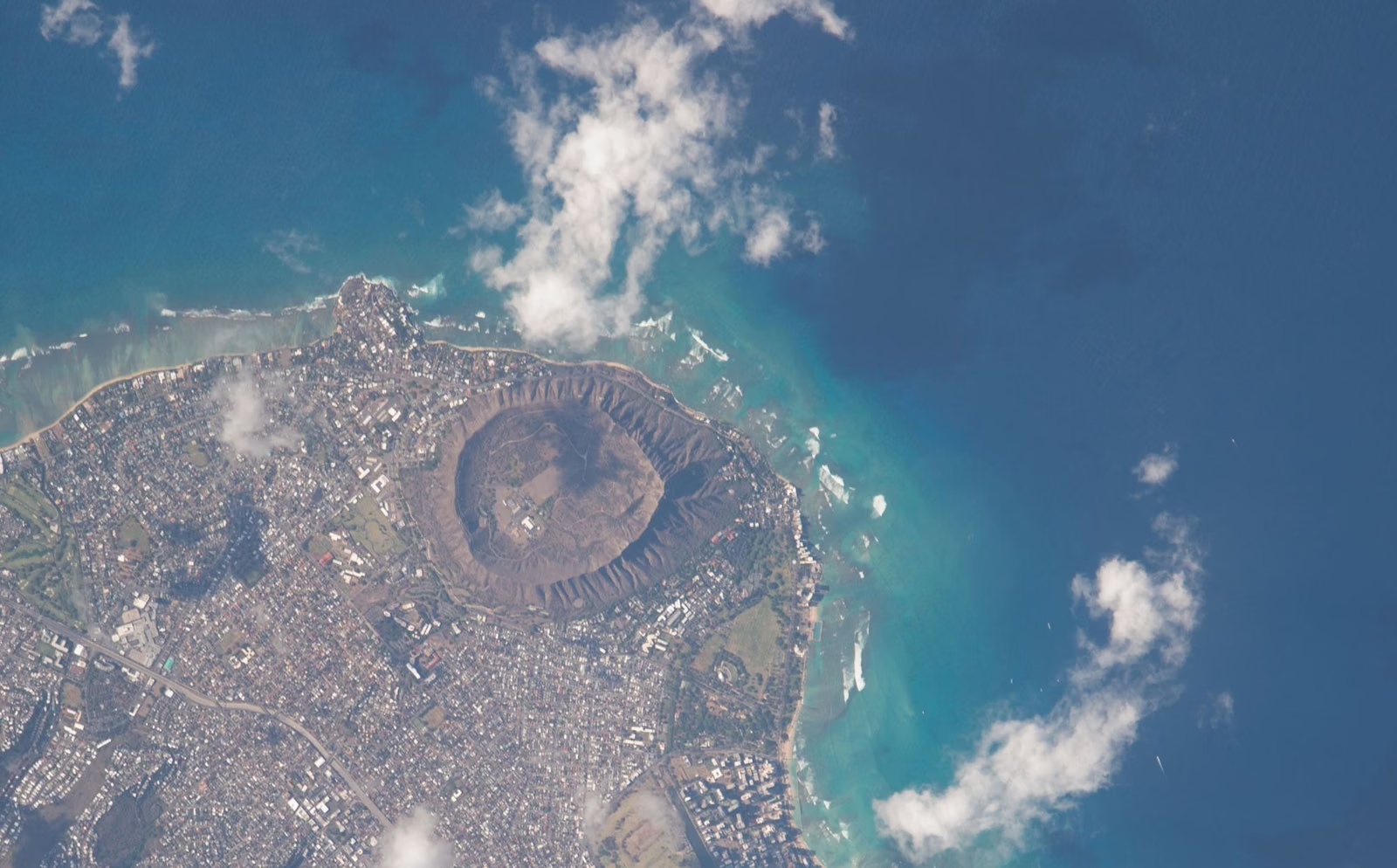
Diamond Head Volcano
Yes. Diamond Head is a volcanic tuff cone, formed about 300,000 years ago in a single, brief, explosive eruption, according to Hawaii State Parks. The eruption blasted ash and fine particles into the air; as they settled, they cemented into a rock called tuff, which built the broad, saucer-shaped crater. You can see the tuff along the summit trail.
The Crater at a Glance
How a Tuff Cone Forms
Oʻahu began 2.5 to 4 million years ago with eruptions from two shield volcanoes. Long erosion left their remains as the Koʻolau and Waiʻanae mountain ranges. After about 1.3 million years with no activity, the southeast end of the Koʻolau Range erupted again, this time under the ocean. Water and steam broke the magma into ash and fine particles. Blown into the air and settling back, the particles cemented into tuff and built cones such as Lēʻahi.
Why the Crater Looks the Way It Does
- Wide and shallow: the crater covers 350 acres and is wider than it is tall.
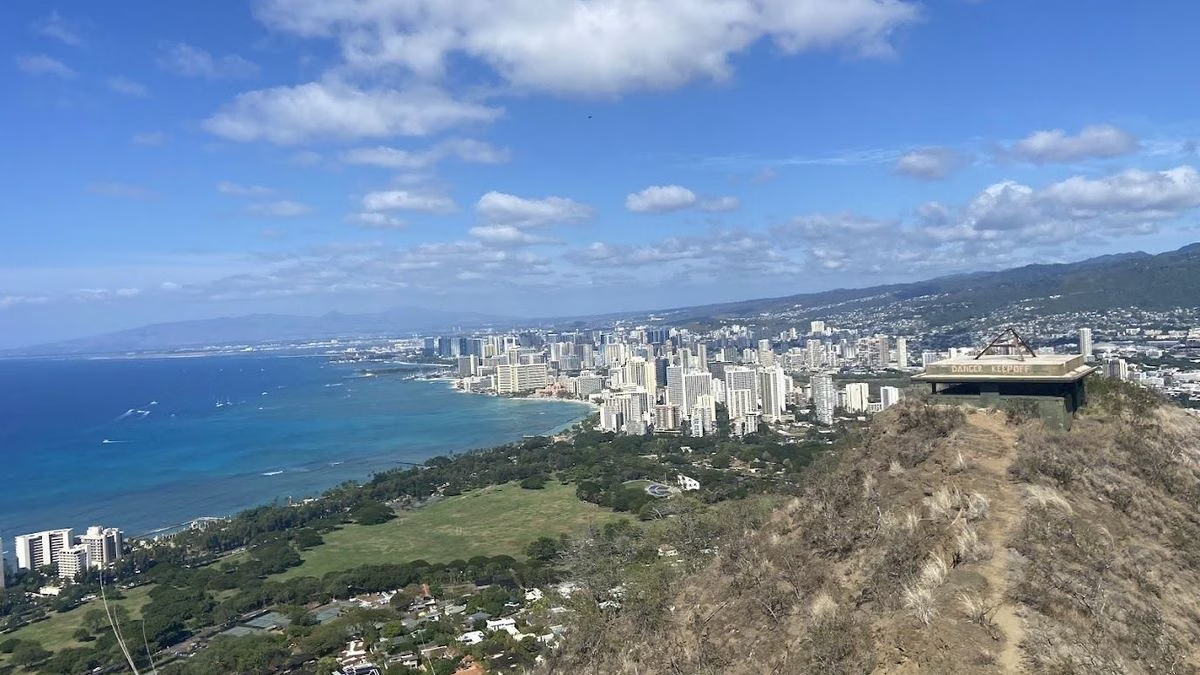
- Lopsided rim: the southwest rim is the highest, because the wind was blowing ash in that direction during the eruption. The summit trail climbs to that high point, 761 feet.
- Worn slopes: since the eruption, rain, wind and the sea have eroded and weathered the slopes. A coral reef now protects the seaward side.
National Natural Landmark
Diamond Head was designated a National Natural Landmark in 1968 as an excellent example of a tuff cone. It is managed as a state monument by the Hawaii Division of State Parks. See about Diamond Head.
What Grows in the Crater
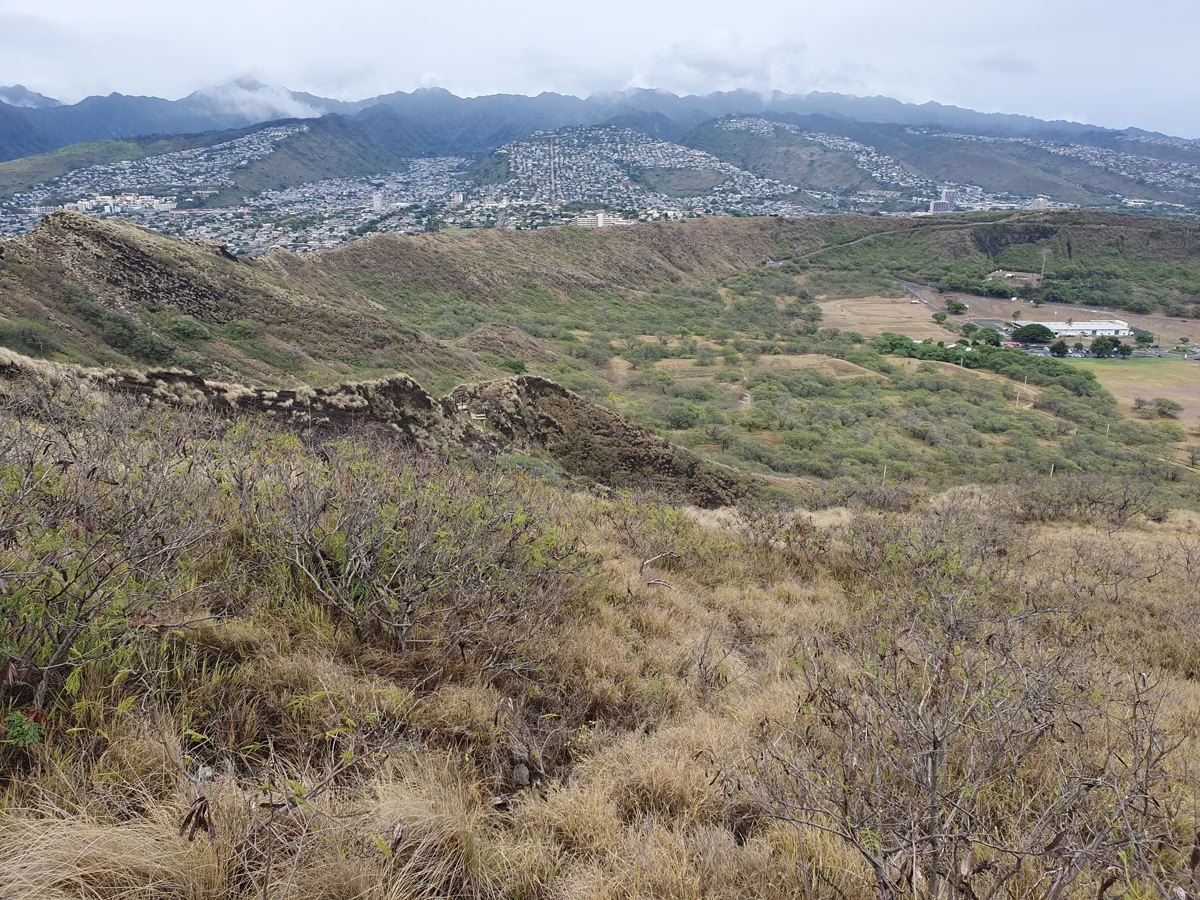
The crater's semi-arid climate, steep rocky slopes and thin soil support mostly low shrubs and herbs. Botanists believe it was once dryland forest; few native species remain, among them ʻilima. Most of what grows today was introduced after the 1800s, mainly kiawe, a relative of mesquite, and koa haole, both brought as cattle feed. Common birds include introduced cardinals, doves and sparrows. In winter, rainwater once pooled on the crater floor in a small lake visited by native ducks and waterbirds until the early 1900s.
See It for Yourself
- The tuff walls are visible along the summit trail above the paved section.
- The summit looks down into the crater.
- The visitor center on the crater floor has exhibits on the crater's history and native wildlife.
Diamond Head Volcano FAQ
Is Diamond Head a volcano?
Yes, a volcanic tuff cone. It formed about 300,000 years ago in one brief, explosive eruption, according to Hawaii State Parks.
Will Diamond Head erupt again?
The state describes Diamond Head as the product of a single, brief eruption about 300,000 years ago, eroding ever since. It describes no later activity.
How big is Diamond Head crater?
The crater covers 350 acres. The state monument, including the outer slopes, is more than 475 acres.
What is tuff?
Rock made of volcanic ash and fine particles that cemented together after an eruption. Diamond Head is built of it.